
Gould Fiber Optics
Gould Fiber Optics is a leading worldwide provider, manufacturer and distributor of passive fiber……...


The CrimeScope® CS-16-500W, the pinnacle of the SPEX Forensics Product Line, was created for departments that choose the power and IR capabilities of 500W Xenon lamps.

Image Credit: HORIBA Scientific

Image Credit: HORIBA Scientific
Features
Use and benefits
The CrimeScope® CS-16-500W, developed for the laboratory to handle every application of a forensic light source but robust and rugged enough to be brought to the crime scene, generates an output in the UV and VIS and is available with optional IR. It is continuously tunable, enabling entire spectrum coverage.
CrimeScope CS 16 500
Video Credit: HORIBA Scientific
Ease of use
On the front of the CS-16-500W-15F is an automatic filter wheel with an LED readout. To manage wavelength selection, a remote control is built into the working end of the liquid light guide. There is no need to install a separate wire, connection, or control because the remote is integrated. For "hands-free" operation, an optional foot switch is offered.
Operate easily with one hand
With one hand, users can both direct the light and choose the wavelength, relieving the other hand for evidence collection. This design, which places the wavelength selector at the end of the light guide, is unique to SPEX Forensics’ Light Sources.
Infrared capability
Infrared output is an option perfect for forged documents and ink-ink differentiation. A light guide with four filters has been added to the device and can be plugged into the port on the side of the instrument. This feature adds four infrared wavelengths: LP630, LP715, LP780, and LP830.
Specifications
Technical specifications
Lifetime: 1,500 hours
Type of lamp: Xenon
Electrical power: 500WAC
Electrical specifications: 100-220 VOLT +/10%, 50/60 Hz, 7 AMP
Warranty: One year on parts and labor
Features
New high-throughput filters
Most complete—15 wavelengths on internal motorized wheel
High-intensity 500 W Xenon bulb for superior wavelength coverage
Wavelength fine-tuning
UV (300–400 nm), 415 nm, 445 nm, 455 nm, 475 nm, 495 nm, CSS (Crime Scene Search short pass filter SP540 nm), 515 nm, 535 nm, 555 nm, SP575 nm, 600 nm, 630 nm, 670 nm, white light.
Uniform and adjustable illumination spot
Remote control for one-hand operation
Optional computer control software
Optional infrared capability; LP 630 nm, LP715 nm, LP780 nm, LP830 nm
For added convenience, the CrimeScope may be configured with 12 wavelengths.
CrimeScope CS-16-400 and CrimeScope CS-16-10
The original CrimeScope CS-16-10 was launched in 1993, and its sequel, the CrimeScope CS-16-400, are no longer functional. They have been substituted by the CS-16-500W mentioned above.
SPEX Forensics continues to support both earlier CrimeScopes.
Applications
Bruises, bite marks, and pattern wounds
Image Credit: HORIBA Scientific
A tunable or multiple wavelength forensic light source may disclose bruising and patterned wound characteristics unseen under conventional white light illumination on some individuals.
Detection of body fluids with an alternate light source

Image Credit: HORIBA Scientific
Since body fluids, such as semen, saliva, and vaginal fluids, are naturally fluorescent, using a light source provides a novel approach to locating them. Instead of evaluating complete, huge items of evidence, such as a mattress, carpet, sheet, or article of clothing, a crime scene investigator can narrow down the particular regions of stains for collection. The dried body fluids will glow when illuminated by the light source.
Detection of gun shot and explosive residues

Image Credit: HORIBA Scientific
Many kinds of residues are observed in ammunition and explosives, which fluoresce. Observations of items can be made without touching the surface using a tunable forensic light source to detect if fluorescent residues are present.
Detection of trace evidence

Image Credit: HORIBA Scientific
Forensic and other light sources can identify both fluorescent and non-fluorescent trace evidence.
Questioned documents
Image Credit: HORIBA Scientific
The primary applications regarding questioned documents and alternative light sources focus on “ink differentiation”. Even within the same apparent color type, many inks have various formulas. By observing ink responses as the hue of the light is tuned across the visible and infrared areas, a tunable forensic light source can be utilized to determine tiny differences in ink type.
Gould Fiber Optics is a leading worldwide provider, manufacturer and distributor of passive fiber……...
The FieldSpec HandHeld 2 GPS receiver is mainly designed for working with this instrument and aut……...

K-Tek International is a global marketing company that has partnered with world-wide companies to……...

AmeriWater is the premier provider of water treatment equipment to the dialysis, health care, and……...

CZR Resources (CZR) is an established multi-commodity exploration and development company with at……...
Shepherd Color is a fourth-generation, family-owned business dedicated to being a world-class pro……...

Item North America is a premier provider of precision ball screws for use as a drive mechanism in linear slides, multi-axis motion and complex material handling devices. item ball screws feature hi……
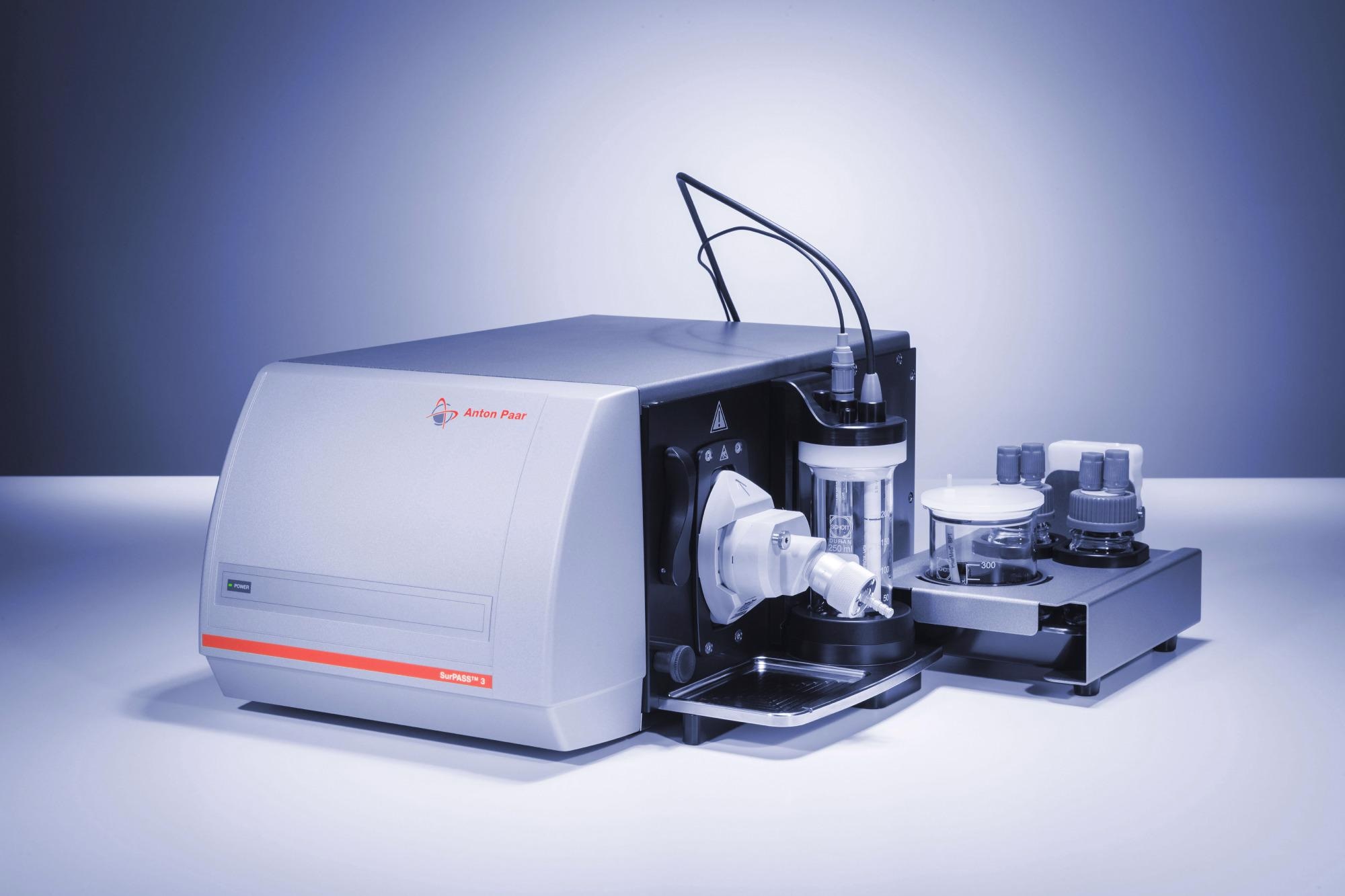
SurPASS™ 3 is capable of measuring the zeta potential over an extensive range of materials and allows the analysis of varied surface properties and their changes. The zeta potential explains ……

AHP Materials is a specialty materials company focused on the manufacturing and selling of high purity specialty metals and compounds. AHP concentrates mainly on Antimony, Cadmium Sulfide, Telluriu……