
Wiman Corporation
Wiman's custom PVC vinyl, polyolefin, polyurethane, and fabric laminated plastic film materi……...


Dichroic beamsplitters can be defined as shortpass and longpass filters used at non-normal angles of incidence. These filters are excellent at reflecting a specified spectral region, while efficiently transmitting another spectral region.
Dichroic beamsplitters come in all wavelengths, with reflectivity often reaching values higher than 98% and transmission usually reaching values greater than 85%.
Dichroic beamsplitters are non-absorbing, and therefore, all the light that is not transmittedis specularly reflected. In a majority of applications, the dichroic beamsplitters are oriented at an angle of 45° so that the reflected light creates a 90° angle to the incident light, though any angle less than 100° can be realized.
In case the angled filter is a longpass, the shorter wavelengths will be reflected in an off-axis direction, while the longer wavelengths will be transmitted via the filter that lies parallel to the path of the original and incident light beam; hence the word dichroic, which means two colors.
When dichroic beamsplitters are used at angles different from the normal angle of incidence (AOI), the polarization of the incident beam turns out to be significant. S-polarized light and P-polarized light interact differently with the thin-film stack, usually resulting in a step in the %R or %T measurements at AOI that is above 20° when a regular setup is used.
By knowing the polarization state of the incoming light, measurements can be made using either P-polarization or S-polarization to reflect the customer’s experimental setup more precisely. While a majority of the customers prefer to reduce the variation between S-polarized and P-polarized responses, the varying spectral properties can also be manipulated to isolate the S-plane and P-plane of polarization states.
Filter Description
Dichroic beamsplitters are defined by:
Cut-off edge (SP)—the wavelength of the edge at 50% of the highest transmission of the filter
Cut-on edge (LP)—the wavelength of the edge at 50% of the highest transmission of the filter
Transmission range—the spectral region where the filter transmits
Reflection range—the spectral region where the filter does not transmit
Polarization—the degree of spectral separation caused by polarization
Edge steepness—the edge slope between transmission and reflection
Filter Types
Dichroic (DC)
Dichroic filters offer broad regions of both reflection and transmission. They display a high degree of polarization, together with a slightly shallow transition slope.
Dichroic Mirror (DM)
Dichroic mirrors include a steep transition slope, a broad region of reflection, reduced polarization effects, and a restricted transmission region.
Dichroic Reflector (DR)
Dichroic reflectors include a steep transition slope, a broad region of transmission, low polarization, and a restricted reflection region.
Cube Beamsplitters
Highly efficient polarization of the incident beam is provided by cube beamsplitters. In addition, these beamsplitters prevent the unwanted lateral displacement of the transmitted beam, as well as ghost images of the reflected beam.
To produce cube beamsplitters, the hypotenuse of a right-angle prism is first coated, and then cemented to the hypotenuse of another right-angle prism. Omega Optical’s product line includes all types of filters that come in a polarizing cube configuration.
Mirrors and Partial Mirrors
Overview
Both mirrors and partial mirrors reflect evenly across a wide spectral range. Partial mirrors operate at off-normal angles of incidence. They reflect just a portion of the incident light and transmit the remainingpart of the incident light.
Beamsplitter Filters
Beamsplitter filters can be designed to perform across ranges as broad as 700 nm. Users can locate the performance anywhere in the spectral region from 240 to 20,000 nm. The value of the ratio of the transmitted light to reflected light (%T/%R) can be anywhere between 99/1 and 1/99, with standard products, including ratios of 30/70, 50/50, and 70/30.
Total Reflector Mirrors
Total reflector mirrors reflect 92% to 99% across their main spectral region. These mirrors are produced with a wide range of metal coatings, such as silver, gold, aluminum, and special types of alloys. These coatings are over-coated with a protective thin film.
Dichroic Reflector Mirrors
Dichroic reflector mirrors reflect higher than 99% across a slightly narrower spectral region. They are made with numerous layers of dielectric materials and absorb almost none of the light within the design’s spectral region.
Wiman's custom PVC vinyl, polyolefin, polyurethane, and fabric laminated plastic film materi……...

Surface Concept develops, produces, and delivers products and technology for pico-second imaging ……...

Wenzhou Sundoo Instruments Company is a high-tech enterprise, specializing in research, productio……...

SaltX is a Swedish Greentech company that develops and markets sustainable technology that will b……...
/9-9-I-9M-9M-9-9A-9-9G-9G-9E-1/ Galaxie Corporation是全球领先的机械经销商,用于购买,销售和库存……...

We are an experienced, dynamic and expanding company already established as a leading UK manufact……...

Item North America is a premier provider of precision ball screws for use as a drive mechanism in linear slides, multi-axis motion and complex material handling devices. item ball screws feature hi……
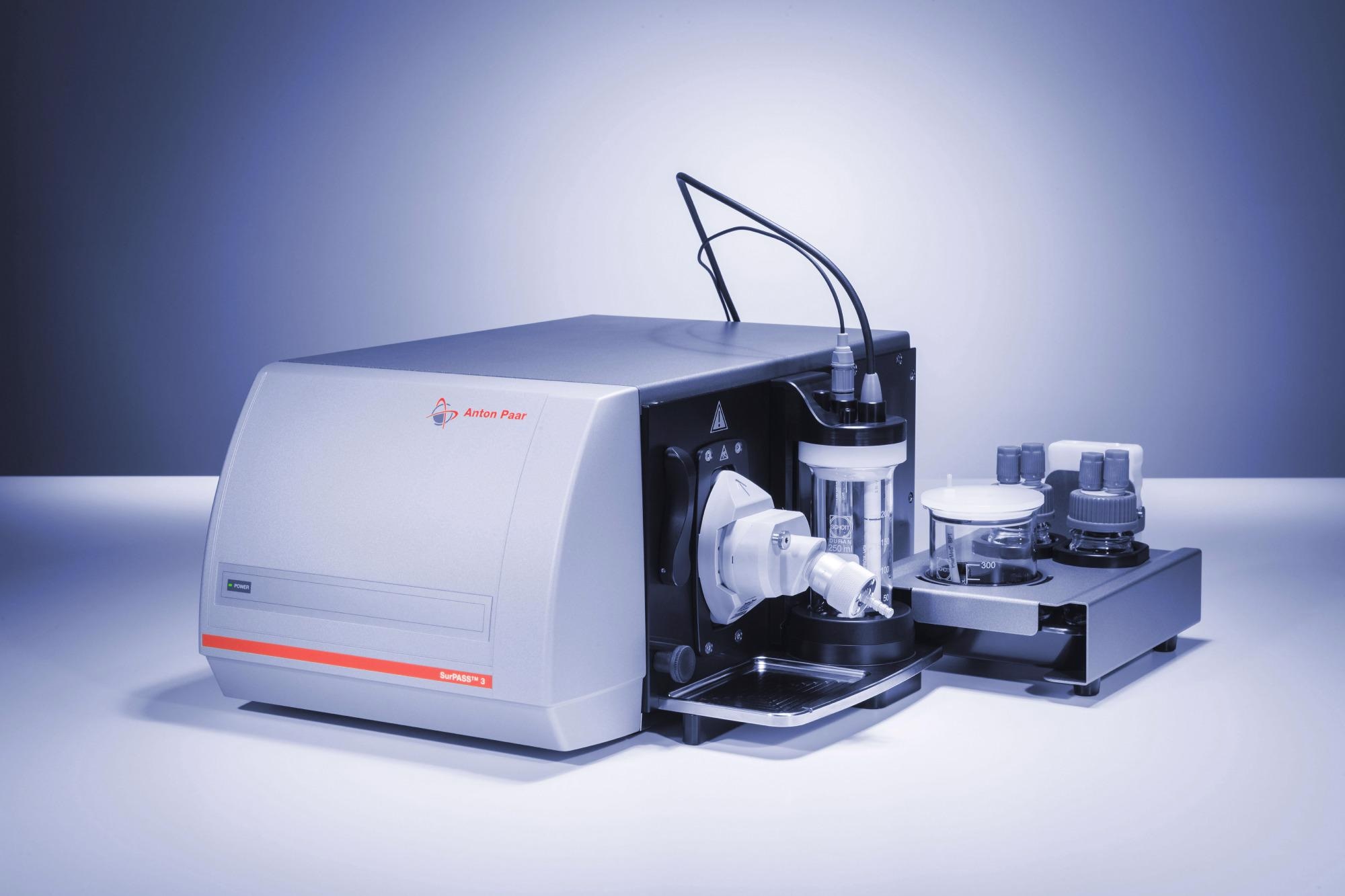
SurPASS™ 3 is capable of measuring the zeta potential over an extensive range of materials and allows the analysis of varied surface properties and their changes. The zeta potential explains ……

AHP Materials is a specialty materials company focused on the manufacturing and selling of high purity specialty metals and compounds. AHP concentrates mainly on Antimony, Cadmium Sulfide, Telluriu……