
Icon Scientific
Icon was set up to challenge conventions. To design better. To build better. To make analysers an……...


After the pioneering “A 10 mK Scanning Probe Microscopy Facility” developed by JanisULT for the National Institute of Standards and Technology (NIST) [review of Scientific Instruments, 81, 121101 (2010)], JanisULT has effectively designed yet another top-loading mK STM dilution refrigerator (DR) for Korea-based Samsung Advanced Institute of Technology (SAIT) with many improved design and performance features in comparison to the previous system.
The SAIT system has 1.5″-diameter central access into the UHV space and contains a 15.5 Tesla superconducting magnet. Through a top manipulator, the massive bore-central access helps translate an STM with an in-situ-prepared specimen and probe tip into the magnet center without warming up the system to more than 4 K.
Image credit: JanisULT
Listed below are other novel features of the SAIT system:
Extensive coaxial cables and UHV compatible wires have been installed to accommodate the unique applications of users
Depending on the experience with the NIST system, the SAIT system uses a Joule-Thomson (JT) stage for mixture condensation together with the 1K pot
An easy-to-use mechanical heat switch has been installed to enable rapid pre-cooling of the DR stage
JanisULT automated gas handling system (GHS2) equipped with an oil-free Roots pumping station
Several shutters have been installed to obstruct the infrared radiation heat load
The SAIT system has been effectively deployed on-site and has achieved the following performance specifications:
The mixing chamber has achieved a base temperature of 6.6 mK for every CMN sensor calibrated with the fixed superconducting point device (FPD)
The solenoid has achieved the highest magnetic field of 15.5 T at 4.2 K with DR at a base temperature
Over 300 µW at a cooling power of 100 mK has been realized
To demonstrate the performance and atomic resolution of the ULT STM, a certain user has been learning graphene and graphite to date; now, a “standard” superconducting sample can be utilized to quantify the BCS gap and find out the electronic temperature
According to the user, “We now have a UHV ultralow temperature scanning probe microscope working with a base temperature of 6.6 mK and the maximum magnetic field of 15.5 T.”
Other configurations, such as bottom sample loading versions, are also available.
Icon was set up to challenge conventions. To design better. To build better. To make analysers an……...
![[db:国别翻译]美国采纳青铜公司](/wp-content/uploads/35upplier35/full_site_logo.png)
Advance Bronze Inc. 是一家位于俄亥俄州洛迪的离心和连续铸造青铜制造商。他们专门提供高质量的青铜产……...

Nordic Semiconductor specializes in ultra-low power wireless communication supporting Bluetooth l……...

The AirSentry II Mobile AMC Monitor is the first true mobile method for monitoring airborne molec……...

Side by Side Optics (SSO) provides complete optical engineering services for optical product deve……...

Resonetics provides innovative micromachining for 2D and 3D medical devices. Utilizing UV laser w……...

Item North America is a premier provider of precision ball screws for use as a drive mechanism in linear slides, multi-axis motion and complex material handling devices. item ball screws feature hi……
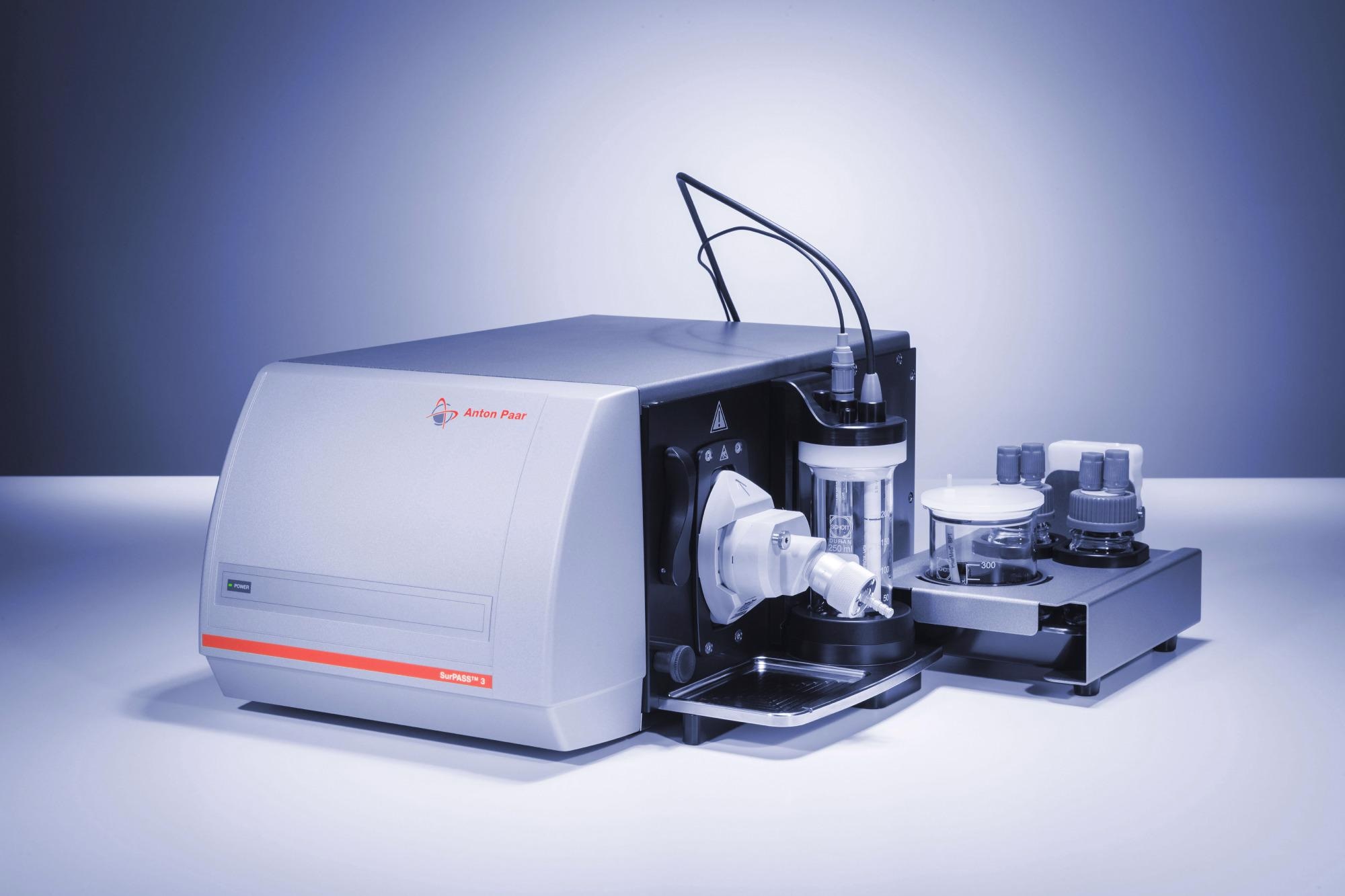
SurPASS™ 3 is capable of measuring the zeta potential over an extensive range of materials and allows the analysis of varied surface properties and their changes. The zeta potential explains ……

AHP Materials is a specialty materials company focused on the manufacturing and selling of high purity specialty metals and compounds. AHP concentrates mainly on Antimony, Cadmium Sulfide, Telluriu……